
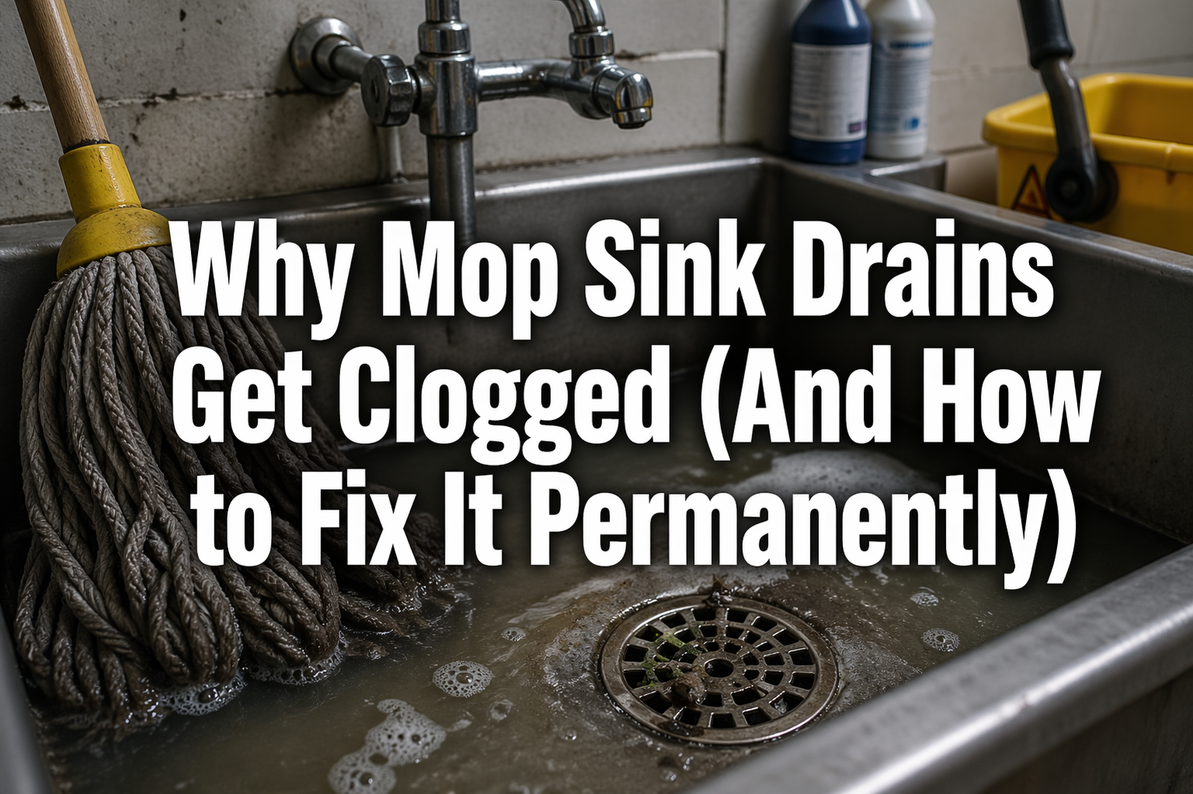
Why Mop Sink Drains Get Clogged (And How to Fix It Permanently)
If you operate a restaurant, commercial kitchen, or facility, chances are you’ve dealt with a clogged mop sink drain. It starts slow, then suddenly water won’t drain, backups occur, and now you’re calling a plumber again. The truth is, mop sink drain clogs aren’t random. They’re predictable and preventable. In this guide, we’ll break down why mop sink drains clog so often, what’s actually happening inside your plumbing, and how to fix the problem permanently.
Why Mop Sink Drains Get Clogged So Easily
Mop sinks are one of the most abused drains in any facility. They’re designed for wastewater, but in reality they handle much more than that.
Mop Strings and Debris
Every time a mop is rinsed out, loose fibers, strings, and debris go straight down the drain. Over time, these materials wrap around pipe interiors, catch other debris, and form dense blockages. This is often the starting point of a major clog.
Dirt, Sand, and Heavy Particles
Mop sinks collect everything from floors including dirt, sand, food particles, and grease residue. Unlike water, these materials settle and accumulate inside pipes, especially in bends and traps. No Drain Protection (The Biggest Issue). Most mop sinks are installed with little to no effective protection at the drain. That means everything goes straight into the plumbing system with no barrier to stop solids. Problems build up out of sight until failure.
What Happens When a Mop Sink Clogs
A clogged mop sink creates more than just slow drainage. It leads to standing dirty water, increased risk of backups into nearby drains, odor and pest issues, emergency plumbing calls, and potential health code violations. Most importantly, it keeps happening again and again if the root cause is not addressed.
Temporary Fixes vs. Permanent Solutions
Most facilities rely on temporary fixes like snaking the drain, using chemical cleaners, or calling a plumber. These may clear the blockage, but they do not stop it from coming back. That’s why many facilities get stuck in a cycle of repeated clogs and service calls.
How to Fix Mop Sink Clogs Permanently
To truly solve the problem, you need to stop debris before it enters the drain.
Install a Commercial Drain Strainer
A proper commercial-grade drain strainer will catch mop strings and debris before they enter your plumbing system. Look for options with fine openings, durable construction, and easy removal for cleaning. You can view commercial-grade options designed for facilities here: https://www.drain-tech.com/drain-strainers/
Grease and Residue Buildup
In restaurant environments, mop water often contains fats, oils, and grease along with cleaning chemicals and organic waste. This creates a sticky coating inside pipes that traps debris, narrows pipe diameter, and accelerates clog formation.
If your facility is already dealing with grease-related issues, it’s worth understanding proper interceptor sizing and performance. See our guide on choosing the right grease trap size here: https://www.drain-tech.com/grease-trap-gpm-calculator/
Upgrade to a Locking Drain Solution
For maximum protection, many facilities are switching to locking drain covers with built-in strainers. These systems stay securely in place, include integrated debris protection, and prevent staff from removing or bypassing them.
This is especially important in busy environments where standard strainers often get removed and never replaced. See how locking drain systems work here: https://www.drain-tech.com/drain-locks/
Implement Simple Maintenance Practices
Even with the right equipment in place, maintenance still matters. Empty strainers regularly, train staff on proper mop sink use, and avoid dumping large solids or grease into the system. Small habits make a big difference.
The Cost of Doing Nothing
Ignoring mop sink drain issues leads to frequent plumbing service calls, expensive emergency repairs, downtime, and long-term pipe damage. In many cases, a simple preventative solution costs less than a single service call.
Recent Posts
-
Why Contractors and Jurisdictions Are Moving Toward HDPE Grease Interceptors
How corrosion resistance, lower weight, and efficient grease separation are making HDPE the new stan …3rd Sep 2026 -

Why Non-Para Urinal Blocks Are the Smarter Choice for Commercial Restrooms
Urinal odor and drain buildup are common problems in restaurants and commercial facilities. What sta …30th Apr 2026 -
Why Mop Sink Drains Get Clogged (And How to Fix It Permanently)
If you operate a restaurant, commercial kitchen, or facility, chances are you’ve dealt with a clogge …24th Apr 2026